How this number is calculated
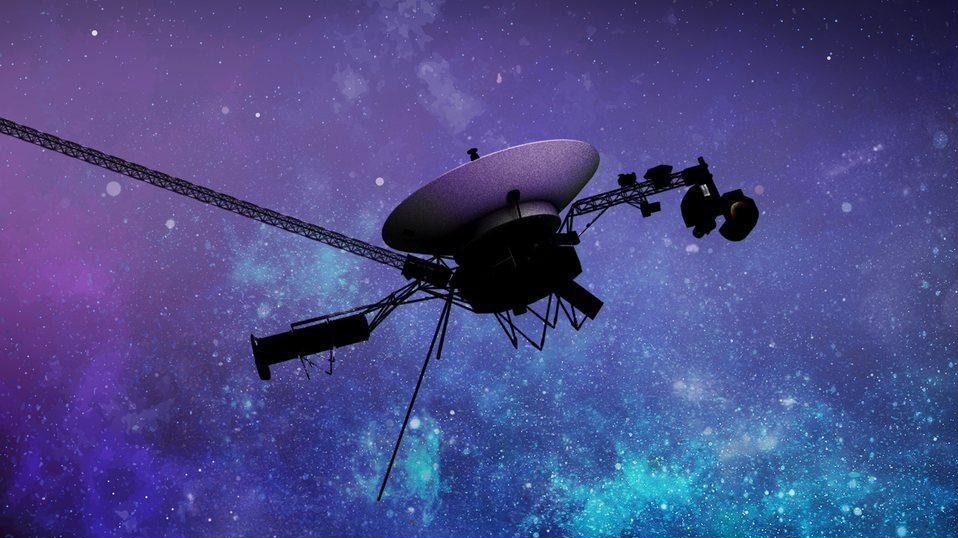
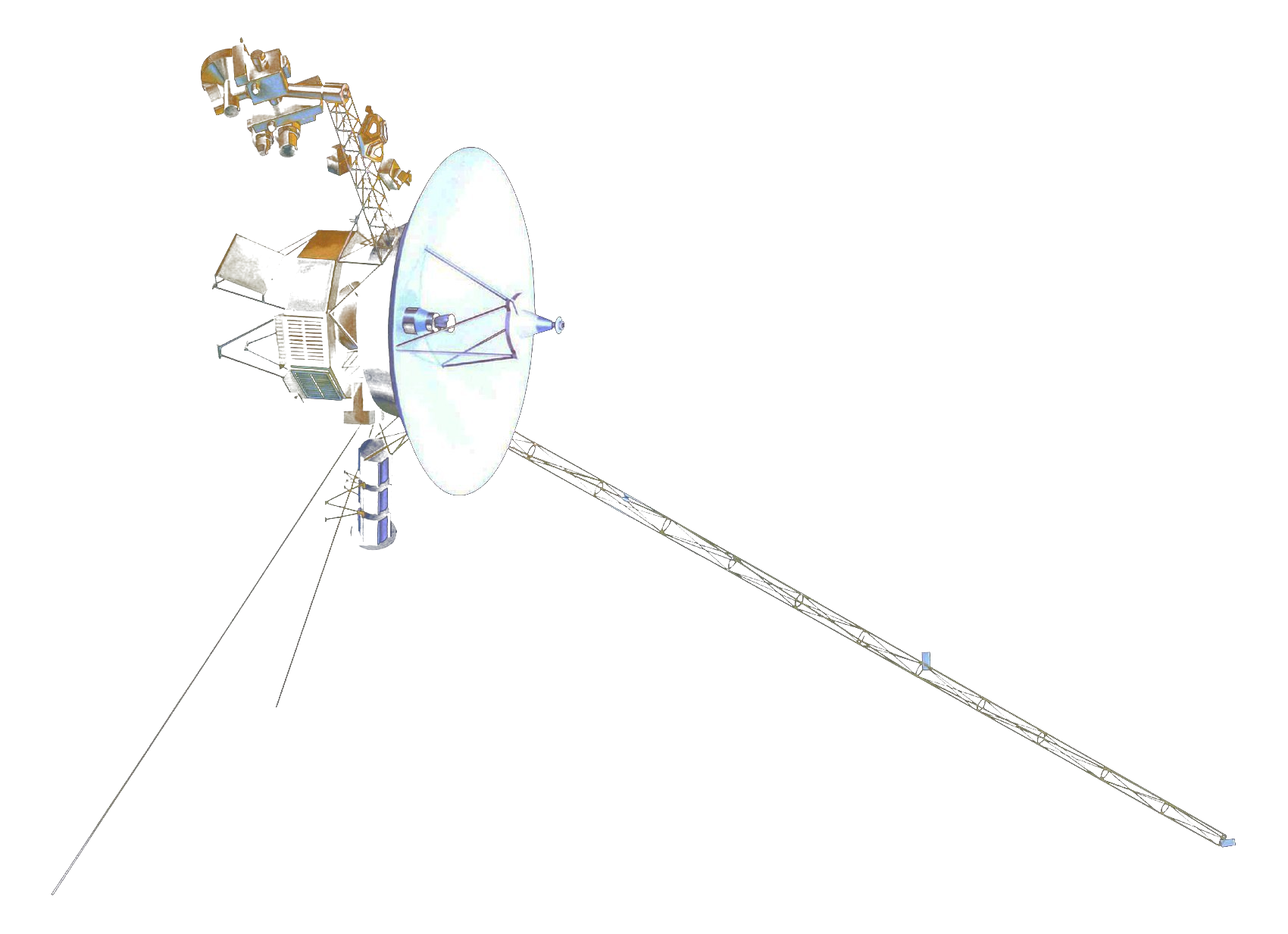
Voyager 1's distance from Earth does not grow at a steady rate, and getting it right is harder than it looks. The spacecraft recedes from the Sun at a nearly constant 16.88 km/s. But Earth orbits that same Sun at 29.8 km/s, swinging roughly 300 million kilometres from one side of its orbit to the other every year. The gap between us and the spacecraft therefore opens and closes depending on where our own planet happens to be standing.
Measured from Earth, Voyager 1's recession rate swings between about −8 and +41 km/s over the course of a single year. The minus sign is not a misprint: for part of every year Earth swings toward the spacecraft faster than the spacecraft pulls away, and the distance between us briefly shrinks. Any tracker that takes a known distance and adds speed multiplied by time drifts millions of kilometres off within a few months.
This page does it differently. It carries 220 anchor points taken directly from NASA/JPL's Horizons ephemeris system — Earth-to-spacecraft range and range-rate at 10-day intervals running from 2026 through 2031 — and interpolates between them using cubic Hermite splines, which match both position and velocity at every anchor. That reproduces the real curve, Earth's orbital wobble included.
There is one further subtlety, and it explains why two different dates for the light-day milestone are in circulation. Horizons can report either where the spacecraft is at this instant, or where it was when the light now arriving at Earth first left it. Those two figures differ by roughly 1.5 million kilometres, because Voyager travels that far during the day its signal spends in flight. This tracker uses the instantaneous distance — the same quantity NASA publishes. The light-time-corrected version would place the crossing about 16 hours later.
The result was then checked against 2,191 independent daily Horizons samples that were held out of the table. Worst-case disagreement across the entire six-year span is 664 km on a distance of 25.9 billion — roughly one part in 39 million. Put another way: if the distance to Voyager 1 were scaled down to a single lap around the Earth, this counter would be accurate to within about three and a half feet.
The one-light-day milestone is measured from Earth — the moment the spacecraft sits 25,902,068,371 km away, which is exactly how far light travels in 24 hours. Measured from the Sun instead, Voyager 1 crosses one light-day on February 3, 2027.